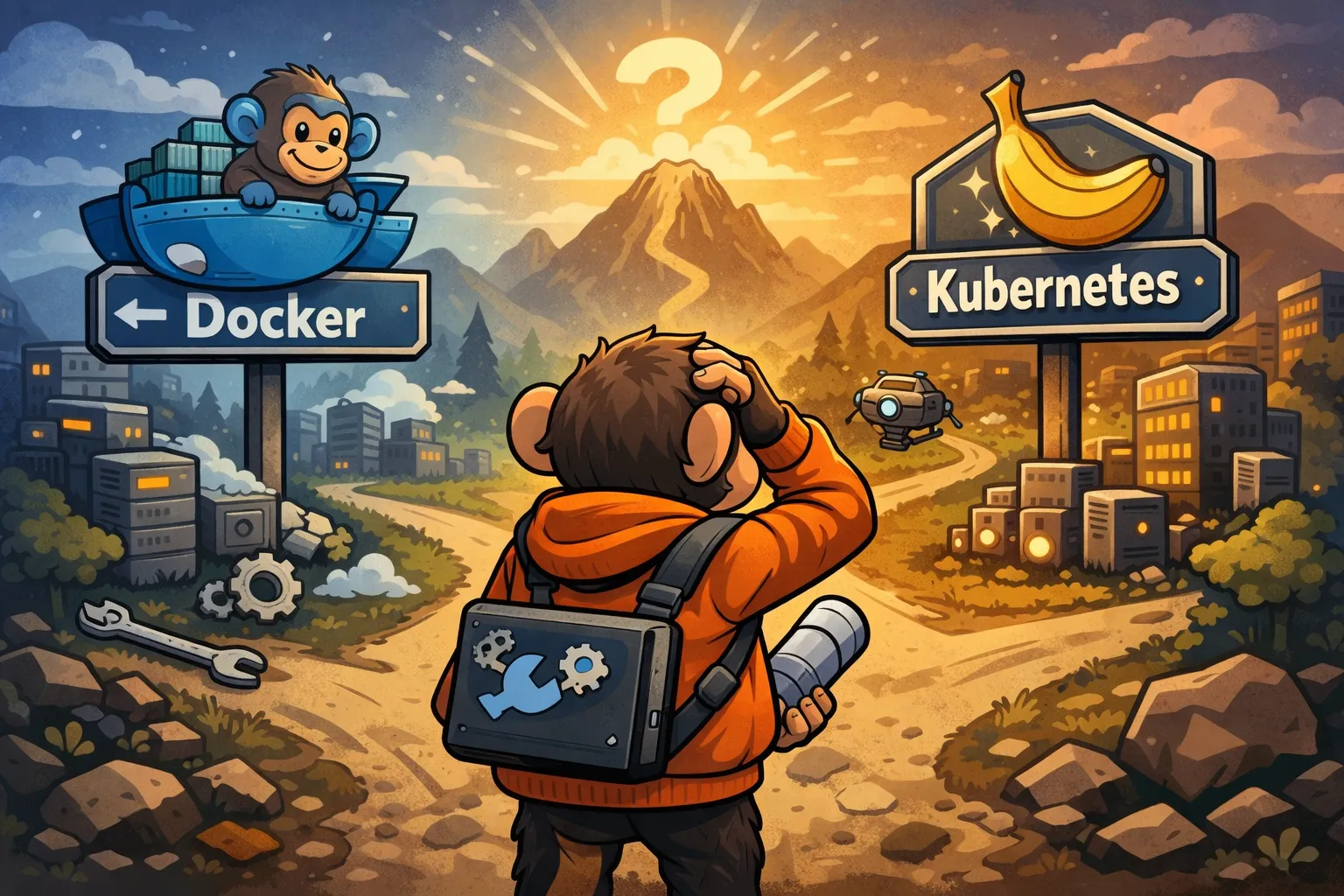
TL;DR
You don’t need to master Kubernetes to land your first DevOps job. Focus on cloud fundamentals, CI/CD, and infrastructure as code. Learn just enough Kubernetes to understand the basics, unless you’re aiming for a specialized platform or admin role. If you want to stand out, build small projects that showcase your skills and document your learning journey.
Table of contents
Open Table of contents
Introduction
“Everyone says you need to learn Kubernetes for DevOps.” If you’ve spent any time in tech forums or job boards, you’ve probably heard this advice. But is it really true for most people breaking into DevOps?
Spoiler: Not really. Let’s break down why, and what you should actually focus on.
The Real DevOps Core Skills
Here’s a fact that might surprise you: 70% of DevOps jobs do not require deep Kubernetes knowledge.
What do they require? Three things:
- Cloud fundamentals (AWS, Azure, GCP, etc.)
- Learn how to provision resources, set up IAM (Identity and Access Management), and understand basic networking (VPC, subnets, security groups).
- Try to get hands-on with the free tiers of cloud providers. Deploy a static website, set up a database, or automate a backup.
- CI/CD pipelines (Jenkins, GitHub Actions, GitLab CI, etc.)
- Start by automating tests and deployments for a simple app. Understand the difference between continuous integration and continuous delivery/deployment.
- Explore pipeline as code and version control integration.
- Infrastructure as Code (Terraform, CloudFormation, Pulumi, etc.)
- Write simple scripts to provision infrastructure. Learn about state management, modules, and how to destroy resources safely.
- Use version control for your IaC code and practice reviewing changes with
plancommands.
Even when job descriptions mention Kubernetes, it’s often just a buzzword thrown in by recruiters. The actual day-to-day work rarely demands deep expertise, unless you’re targeting a specialized role. Focus on the skills that let you automate, monitor, and recover systems—those are always in demand.
The Kubernetes Hype (and Reality)
Kubernetes is everywhere in tech conversations, but for most DevOps engineers, you only need to know the basics:
- Pods
- Deployments
- Services
If you’re not a full-time Kubernetes administrator, you don’t need to understand the inner workings of the control plane, custom controllers, or CRDs. Mastering those is for platform engineers, cluster admins, or senior DevOps roles, jobs that pay well, but are a minority.
Tip: Try deploying a simple app to a managed Kubernetes service (like GKE, EKS, or AKS). Learn how to scale deployments, roll back changes, and expose services. This will give you practical experience without getting lost in the weeds.
A Smarter Learning Path
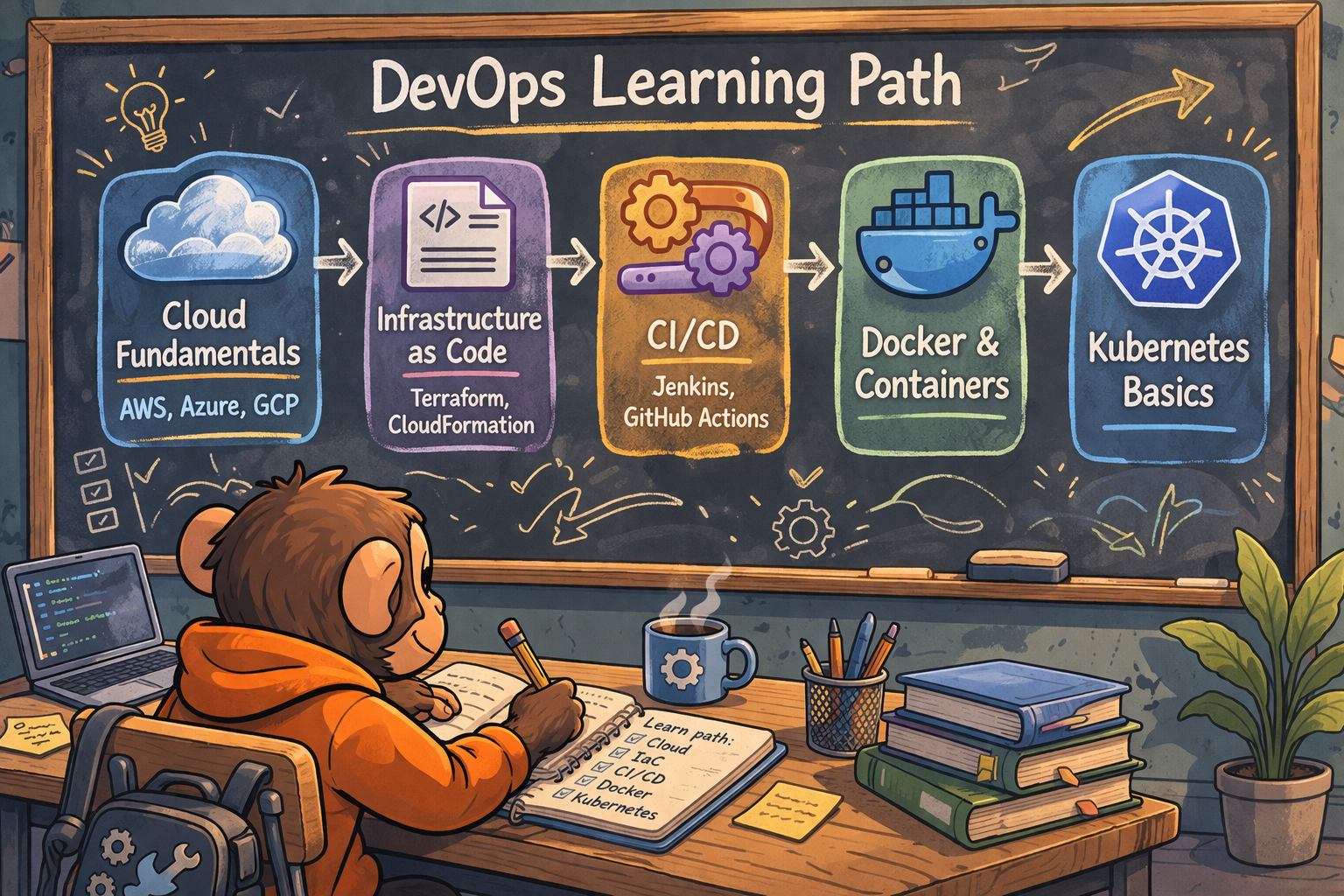
So, what should your DevOps learning journey look like?
- Start with cloud concepts.
- Pick one provider and get comfortable with the basics. Don’t try to learn AWS, Azure, and GCP all at once.
- Learn infrastructure as code.
- Automate the creation of your cloud resources. Practice destroying and recreating environments safely.
- Get hands-on with CI/CD.
- Set up pipelines for your own projects. Add automated tests, linting, and deployment steps.
- Understand containers with Docker.
- Build, run, and debug containers locally. Learn how to write a good Dockerfile and use multi-stage builds.
- Learn Kubernetes fundamentals (just enough to be dangerous).
- Deploy a containerized app, scale it, and expose it with a service. Understand the YAML, but don’t memorize every field.
This approach covers 80% of what you’ll need for most DevOps roles. You can always go deeper later if your job requires it.
Don’t let perfect be the enemy of good. Prioritize what you need to learn, and in what order.
What About Interviews?
You only need to understand the 20% of Kubernetes that covers the basics. That will be enough to have a normal conversation in a job interview, no need to be an expert.
Advice: Be honest about your experience. If you haven’t used a tool in production, say so, but show that you know how to learn and where to find answers. Interviewers appreciate curiosity and practical problem-solving more than buzzword bingo.
The Real Problem: Where to Start?
A lot of aspiring DevOps engineers get stuck not knowing where to start, what to learn, or how deep to go. The tech landscape is huge, and it’s easy to get lost in the buzzwords.
Practical tip: Pick a small project (like deploying a personal website or a simple API) and use it as your playground. Apply each new skill to this project as you learn. Document your process—blog about it, share on GitHub, or write a README. This will help you build a portfolio and reinforce your learning.
Lessons Learned & Takeaways
- Focus on the fundamentals: cloud, CI/CD, and infrastructure as code.
- Learn Kubernetes basics, but don’t obsess over mastery unless your target role demands it.
- Read job descriptions critically, sometimes buzzwords are just that.
- Prioritize your learning path to avoid overwhelm.
- Build and share small projects to demonstrate your skills.
- Document your learning journey—future you (and recruiters) will thank you.
Conclusion
You don’t need to master Kubernetes to break into DevOps. Get the basics right, build real projects, and you’ll be ready for 80% of the roles out there. Save the deep-dive for when (and if) you need it.
Final thought: The best DevOps engineers are curious, adaptable, and not afraid to ask questions. Focus on learning how to learn, and you’ll always be in demand.
Further Reading
- Kubernetes Official Documentation
- Terraform Getting Started
- AWS Cloud Practitioner Essentials
- CI/CD with GitHub Actions
- Docker Official Docs
- Google Cloud Free Tier
Technically accurate chaos beats buzzword-driven learning every time.